
6 Months in a Digital Marketing Agency: What I Learned About Ads, SEO & Websites
Drew joined us for a six-month T Level placement as a junior digital marketer. We gave him a flavour of our agency’s work across ads, SEO, social media and websites.
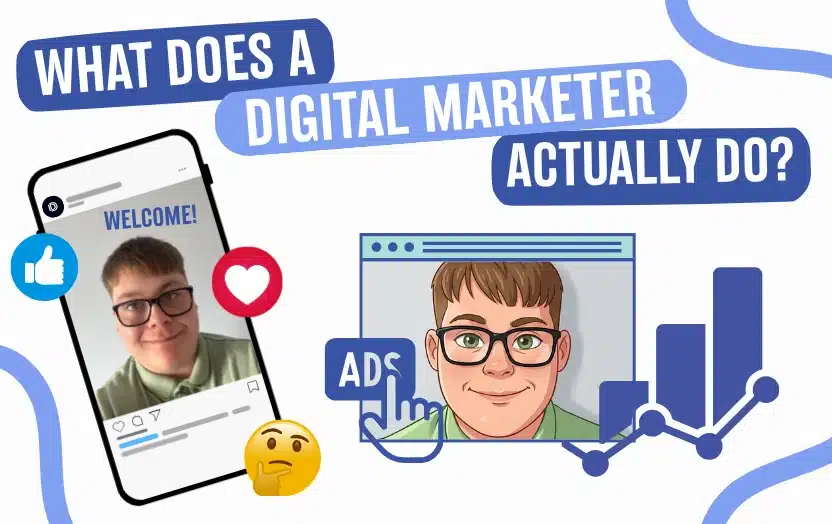
What Does a Digital Marketer Do? Lessons From My Placement
Before starting my placement at Digital Defined Marketing, my idea of digital marketing was that it was all about creating ads. Six months later I had gained hands-on experience with Google Ads campaigns, SEO content and website development projects. Here’s what I learned and how my perception of the industry completely changed.
Who I Am
I am currently studying for a T-Level in Digital, a course that includes work experience placements. Most of my previous experience had focused on general digital skills, so I wanted to challenge myself by learning about digital marketing – an industry I had never considered before.
I decided to complete a placement at Digital Defined Marketing and joined the digital marketing agency for one day a week over 6 months.
What I Thought a Digital Marketer Did
I thought digital marketing was mostly about online advertisements: YouTube videos, website pop ups or TV ads. When I went for an interview at the agency, I heard briefly about the sorts of tasks that marketing involved, which completely shifted my idea of what it was.
What Does a Digital Marketer Actually Do?
Learning How Digital Advertising Works
I began my time at Digital Defined Marketing by creating Google Ads. One thing that surprised me was how much data analysis is involved in digital marketing. Before this placement, I had assumed marketing was mainly about creating advertisements, but I discovered that a large amount of time is spent analysing performance and making decisions based on data.
Google Ads works like an auction. You must decide which keywords you would like to bid for. These are the specific terms people are searching for such as “digital marketing services” or “digital marketing agency near me”. When people search that term you will pay a certain amount for your website to show up to them.
Google Ads Keywords
To create Google Ads, you first need a set of keywords that you want to bid for. You learn what terms people are searching for by doing keyword research.
Keyword research is done typically using a tool like Google Ads. It allows you to put in keywords and see how they have performed. It can also generate some keywords for you based on the style you are going for. You can also look at historic data for your website and this will show you how well you have shown up for different organic searches previously.
Once you have chosen your keywords, you can then build the ad itself. On the Google Ads website, you fill out your keywords and all the fields needed. You create a list of headings, descriptions and pictures. When people see your ad, Google combines the headings and descriptions to create different variations of the ad. It will try to determine which combinations perform best.
Data Analysis
I was given full control over the paid advertisements I made. Throughout my work placement, I would always start my day by maintaining these ads.
I analysed data on how well they had performed, such as how many times they showed up to people, the rate at which people clicked through to the website, and how many conversions were generated. Based on this information, I modified parts of the ads. I also changed the keywords that were being bid for and how the ads looked to people searching.
Doing this over a prolonged period allowed me to test different elements, change things around and find out what worked. It has given me good experience with recognising patterns and data analysis.
My Biggest Achievement
I was particularly proud of managing marketing campaigns that generated a total of 96 conversions during my placement. A conversion is counted when someone does something ‘valuable’ on a website, such as clicking on a phone number or filling out a quote form. Using tools like Google Analytics to track key events like conversions is important. These actions can support lead generation and bring in new customers.
The best week I had was from 25th to 29th May when my ads generated 14 conversions, with an overall conversion rate of 3.86%.
Seeing real results from changes I had made to the Google Ads campaigns was rewarding. It showed me the importance of continuous testing and optimisation.
Digital Defined Marketing:
Refining and improving our work based on real data is vital and we were delighted by how quickly Drew ‘got’ this part of our marketing efforts. It became clear that he really enjoyed this data analysis side of Google Ads.
Facebook and LinkedIn Ads
I also briefly helped set up some Facebook and LinkedIn ads. These work fairly similarly to Google Ads, except you don’t target ads based on keywords and search terms. Instead, you pick the types of people you want to aim the ads at, such as people with a certain job or based in a certain area.
This can be very effective as going purely based on keywords you can’t pick the kinds of people to target, which means they could be anyone. Targeting based on specific types of people enables you to aim at people who are more likely to be buying your product.
SEO in Digital Marketing
Much of what I learned about SEO during my digital marketing placement came from writing a blog for a client’s website.
Google Ads vs SEO Keyword Research
I first did keyword research to understand what people were searching for and therefore what would make a suitable blog subject. There is a difference between keyword research for SEO purposes and for Google Ads. This is largely due to the kinds of keywords we are aiming for.
With Google Ads, we are typically marketing to people who are ready to convert. We match this by advertising our own product or services. We focus more heavily on keywords for people who will be customers there-and-then.
On the other hand, with SEO sometimes we’re aiming for people who don’t even know they want to buy something specific yet. They might just be looking for a solution to a problem. They might know what their problem is, but not what the solution is. As a result, you need to broaden your focus to a wider variety of keywords.
With SEO, Google and other search engines use keywords to understand the page’s topic. They also consider content quality, relevance and user experience. If search engines see your website as relevant to specific search terms, you have a better chance of showing up to the right people.
Using Blogs to Reach Different Types of Customers
Blogs allow you to expand your website’s reach, and are often part of a long-term digital marketing strategy. You can appear to a broader range of people at different points in the buying journey, bringing in more website traffic overall.
Within a blog, you can sometimes reference your business’s services (including internal links), guiding people who may become customers later on. These customers may not be actively looking for your services or products at this point, so your blog can be about something your website doesn’t cover on other pages. It should be different enough to reach different types of people, but still relevant to your services.
The blog I researched and wrote was for a company that rents out motorhomes. Based on my research, I decided to do a blog on glamping. It was completely different to any existing pages on the company’s website, but still targeted potential customers interested in luxury camping.
While writing blogs and other content, you need to add the keywords you have researched throughout your text. However, within SEO everything you do matters. The writing style you follow, accessibility features, image file names, H tags, meta titles, alt text and more.
This was one of my longer running tasks and one I found more challenging, so I had a lot of help from the agency’s SEO team. There were many different parts to keep track of when writing the blog. I had to remember to incorporate keywords, keep the same writing style, and try to link back to what the company did to make it relevant.
Digital Defined Marketing:
We introduced Drew to basic SEO concepts when he first joined us, but researching and writing this blog was a step up. He had also chosen a subject with some competitive keywords, so we knew it would be a challenge to write something that could perform well. Our SEO team gave Drew feedback at multiple stages before giving the blog a final polish to ensure it met our high standards.
Within a month of being published, this new blog began ranking on the first page of Google search results for the main keyword Drew had chosen to target.
Gaining Experience in Website Design
A large part of what Digital Defined Marketing does is creating and editing websites, so I am glad I have been able to experience the process.
I was given access to a draft version of a website that was being built using a tool called Elementor. I was told I had free rein to test out different styles and designs however I wanted, which gave me the chance to experiment and find out what looked good.
I learned that when you make a call to action button, such as something that takes people to convert (e.g. Get a Quote), it should be a colour that stands out. It’s important that it’s as noticeable as possible when sitting along everything else on the page.
With building websites there are lots of things to consider, including:
- Images
- Text styles
- Headings
- Colour theme
It is also useful to consider any future projects, like running Google Ads. If there is a well-performing product, you can create an ad for a specific product page. This allows you to create more targeted ads and SEO for that product alone. This can bring in people looking for that one specific item. It can help to make your page look more relevant – to both customers and Google – compared to competitors.
Digital Defined Marketing:
We wanted Drew to see how flexible our website building tools can be and understand how various aspects of a digital marketing agency’s work all come together. He thrived with this creative task and it enabled him to bring together many things he’d learned with us.
Attending a Client Meeting
During my digital marketing placement I got to join some of the team and meet a potential new client. We went to speak to them at their office to discuss working with them and understand what they would need from us.
It was really interesting to be able to see the start of the process. Up to that point I had only done work for existing and long-standing clients, so seeing what having a new client is like was a great experience.
What Has Surprised Me Most
The biggest surprise was how interconnected everything is. Google Ads, SEO and website design all influence one another. Before starting my placement I thought digital marketing was mostly about creating advertisements, but I discovered that successful marketing requires a combination of creativity, technical knowledge and data analysis.
What I’ve Gained From My Placement
My placement at Digital Defined Marketing helped me develop skills in data analysis, website design, content creation, problem solving and professional communication. It completely changed my perception of digital marketing and gave me valuable insight into an industry I had never previously considered.
There is a lot more behind digital marketing than I ever would have imagined and I’m sure there is plenty left I still don’t know. I have learnt a lot, which will be helpful as I start to decide on the best career path for me. I plan to expand my possibilities further by completing more work experience in a completely different area.
Throughout my placement I regularly received feedback from the Digital Defined Marketing team. This helped me to improve my work and showed me how important collaboration is within a professional environment and it will continue to guide me moving forward with whatever I do.
Digital Defined Marketing:
We were impressed with Drew from his interview as he was both enthusiastic and curious. Throughout his placement he continued to ask lots of questions, always keen to understand how things worked and why we did things a certain way. We’re pleased Drew has gained so much from his placement and that we’ve been able to give him a great mixture of first digital marketing experience. Keen to build on this, Drew returned during his summer break to support us with Google Ads and content research.
Are you looking for a marketing agency to partner with?
You might also like

Having a social media presence is essential for modern businesses. Our guide will help you choose the right social media platforms for your business.

The risks of losing track of log-ins and passwords Secure digital access management is crucial for businesses of all sizes. Imagine a staff member leaves suddenly and you realise that no one else in the Read more...

You’ve probably noticed how hard it is to get people to fill in forms or pick up the phone these days. Everyone wants instant replies, or to share pictures and drawings quickly.